You've got to stay hungry!
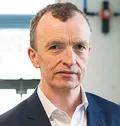
John Power
CEO and founder, AerogenJohn Power , CEO and Founder of Aerogen
“In countless businesses, people benefit from past history without being personally involved or having a vision to bring to the table. The shareholder base gets misaligned regarding objectives, which always ends in disaster.”
John Power , CEO and Founder of Aerogen , shared his key leadership lessons and reflections on the state of the MedTech innovation in Europe in my "Leading Through Disruption series.
Could you please describe your path, emphasizing the few pivotal moments that led you to where you are today?
Power: I left school at 16 – I could not wait to get out into the workforce and become independent as soon as possible. I started my career as a Junior Draftsman working on huge drawing boards with fine ink pens and geometrical instruments, this was well before CAD (Computer Aided Design) systems began. Back then apprenticeships in engineering were common and I worked during the day and studied at night for my Engineering Qualifications. I am now a Chartered Engineer but this learning the nuts and bolts of my trade on the shop floor benefited me hugely later in life once I started running my own technology-based companies. I understood the entire process, from the idea conception and design of a product through manufacturing and operations. I also always made it my business to work closely with the Sales and Marketing teams, choosing to spend a lot of time with them in the field so I could get a closer appreciation of what the product needs were. I learnt my business skills ‘on the job’ but once I started getting involved in financing startups I took it upon myself to do an Executive MBA from Oxford Brookes University to appreciate the theory and strategy of building a business.
So, my early years were about learning my trade and practicing engineering skills in the petrochem and aerospace businesses. In the mid-1980s, I joined the UK's first robotics and automation company. I was their first engineer and witnessed the fundraising part of a startup equation. As a young working-class Engineer in London I had always been slightly in awe of the City finance world and had assumed the guys wearing the sharp suits and driving the flashy cars must be much smarter than I could ever be. And then, in meetings with them they would ask some of the dumbest questions. It was an eye-opening experience for me as I understood whilst I could quickly learn finance, those folks would never gain the detailed knowledge of engineering and science that I had. That really gave me the reassurance and confidence to start up my own business.
I moved to Ireland with my family and set up a company, originally in an aerospace venture, utilizing a bonding process developed for the first Space Shuttle to design lighter weight structures (hence reduced fuel cost) for aircraft interiors. Unfortunately, the aerospace industry experienced a market crash in the early 1990’s and having put my entire life savings into the project I was forced to pull the plug on it. I had a young family with three children under five, no funds and the bank looking to take our home. I took out one of the first ‘online home improvement loans’ the proceeds of which I used to make interest payments effectively holding the bank at bay whilst I scrambled to generate some earnings. A ‘no-foal-no-fee’ project came up to solve a problem with silting up of irrigation tanks on the Libyan ‘Great-man-made River Project’. With a basic PC and drawing package I had saved from the business closure I designed a retro-fixable balancing tank and shipped the prototype to Tripoli. It was a great success and just when we were down to our last few pounds from the home improvement loan a cheque came through the post. So designing tanks for Conel Gadafi, albeit irrigation tanks, saved me from total ruin. It was certainly a very hard time on my entrepreneurial journey however it was also an enriching learning experience. You truly learn about yourself when you reach the bottom of the barrel and manage to pull yourself back out. I don’t allow business to stress me anymore, you can survive anything so long as you have a healthy family and good friends –that's what matters in life.
Having survived a very difficult time during the aerospace downturn I decided to look around for a new industry sector to work in. Driven by an influx of US MNC’s into Ireland in the mid-90’s the Med-tech industry was on the rise and I felt this was a sector in which I could appropriately deploy my skills. Whilst I fully intended to start up my own business again I realized I first needed to join one of the MNC’s so I could learn from the inside the nuances of the Med-tech world. I took a role with Puritan Bennett a US company who were then a world leader in mechanical ventilation for acute care patients. I stayed with the company for four years working on the successful development of a new ICU ventilator whilst always thinking of new product ideas on which to again start a business. The right opportunity finally presented itself as I could see that, the then available means for aerosolised drug delivery to ventilated patients was very limited and inefficient. That was really the catalyst for the company that's today Aerogen.
What was the business environment like in which Aerogen was born, and how did you think about the 'how' behind the company throughout the years?
Power: In the past 40 years, successive Irish governments have run the industrial
policy of the country a bit like a company. They focused resources and bet on which sectors were likely to grow and evolve and create the most employment and wealth. They attracted FDI initially in manufacturing for the Computer industry and then later in Telecoms, Aerospace and now IT/Tech, Pharma and Med-tech. In parallel they invested in free education and particularly in STEM and now have one of the highest levels of third level participation in the world. With these principals Ireland has developed from a post-colonial agricultural economy into a world leading technology and science hub, it’s a great success story really.
Medtech was as close as possible to a man-machine interface and, therefore, a highly fascinating industry. Once I got into this sector, I figured I could never leave it. It was gratifying from the very beginning to play an integral role in helping to save patient life’s, it’s hard to beat that for job satisfaction.
The medical field has always been regulated and capital intensive. Still, 25 years ago, I could bootstrap the company while delivering on R&D projects for large clients and designing my first products. In time, I started getting more and more people involved. The business grew and went through a series of transactions.
I merged Aerogen with a US business, and we went public on NASDAQ in 2000. Whilst the company successfully advanced its technology and programs I learnt as a publicly listed company you are very vulnerable to changing market dynamics. In 2OO5 a further economic downturn and market crash led to a hostile takeover of Aerogen. Two years later at the end of 2007 I implemented a LMBO and returned the company to private. I said to myself having survived, "I will never allow financial dependence again."
Independence guarantees we can invest long term and deliver best-in-class technology that continues to be a standard of care in our field.
I am not against VC and PE—I'm invested in some of them—but they have a clear remit to return money to their partners. My plan is to reinvest money back into the business.
Could you talk about an area of development that has benefited from your ability to be in complete control of your company’s destiny?
Power: We developed a solution to aerosolize surfactant for premature babies with Respiratory Distress Syndrome (RDS), potentially avoiding the need for intubation. There are significant technical and clinical challenges to doing that. Being fearless of long-term investment was paramount. We have already invested 70 million euros and will invest another 70 to 100 to see the product on the market.
We build on technologies that are already among the best in the world. All the big medical ventilator companies use our solutions. We are like "Intel Inside," in ventilators worldwide. At the same time, there is the surfactant component. We want to achieve something nobody else has been able to!
Having the discipline not to sell might decide whether a one trillion USD company is even possible in Europe. What does it take to develop such a discipline?
Power: You must align with people with a long-term vision, not short-termism!
Several billion euro companies in Germany have been under family ownership for generations. The UK has had that, but many English companies went public and later on, were eaten up by international competitors, losing their identity and purpose.
When I emigrated to Germany 33 years ago, I was deeply influenced by how the country learned from its history and embraced excellence in engineering, manufacturing, and the automotive as well as chemical industries. Today, we know that many mid-sized family-owned champions underinvested in data technologies or did not carefully watch China's rise. How do you ensure that the business does not succumb to complacency?
Power: You've got to stay hungry! In countless businesses, people benefit from past history without being personally involved or having a vision to bring to the table. The shareholder base gets misaligned regarding objectives, which always ends in disaster. There are thankfully still successful family-owned companies that are reinvesting for growth.
How do you define leadership?
Power: Two words Purpose and Ambition - and instilling alignment between those - are key leadership ingredients.
In life science, having a purpose is easy. Our products have treated over 20 million patients in critical care in ICUs worldwide.
On the other hand, people have natural aspirations in life. Still, a leader must match their individual ambitions with the company's.
If you get good alignment there, people will see progress in their careers. They can learn and develop to support the company's purpose.
How do you choose to spend your time as a CEO?
Power: I spend most of my time between Marketing and R&D because I believe in what Peter Drucker said: "Marketing and Innovation produce results; the rest is costs."
How does new European regulation impact medtech startups?
Power: I'm involved with BioInnovate in Galway, a hub for early-stage medtech companies. It is challenging because European regulation has become increasingly bureaucratic, overloaded and ridiculous, making it take far longer to get a product to market and costing far more. We're seeing a significant exodus towards the US, where the American FDA process is a far cleaner, more straightforward route to market. Europe shot itself in the foot with the current Medical Device Regulation (MDR).
We will see a deficit of medical care between Europe and America in the future, as all the companies in Ireland target the US market first, not Europe. We're going to be behind!
I've read somewhere that Europe - rather than developing as an entrepreneurial-driven -economy it has shifted toward becoming more of a benevolent welfare economy. But we can only look after everybody in our society by generating new wealth.
What advice can you give to young founders?
Power: Founders should answer the most critical question: Where do you add value? And where does your business add value? When you repeatedly ask these questions throughout the years of building a business, wealth will follow. Overconcentrating on how you're going to get rich fast is a recipe for disaster.
Years ago, I used always encouraged young founders. But today, I don't believe I was necessarily doing them a favor. So now I try to be more honest and tell these people the truth if I don't think their idea or product will be competitive. Everyone will tell you that you are wonderful until you ask them to put their money on the table.
What are you looking for in young entrepreneurs?
Power: I always want like to see them invest in the business they are promoting. These days there is lots of early government and EU aid for founders. But you're not taking a real risk when that risk is totally funded for you. Equity doesn't really count; if things fail apart, you lose time, but not hard cash. Even investing a small amount – like a €10k loan from mum or dad or friends – is a sign you've got your skin in the game.