What we need is a Sputnik moment

Cornelius Baur
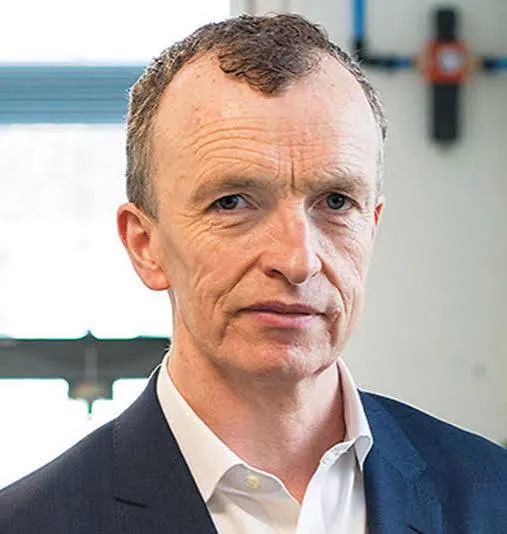
Senior Partner Emeritus, McKinseyCornelius Baur, Senior Partner Emeritus at McKinsey
“What we need is a Sputnik moment—a time when politics aligns seamlessly with business. For instance, I recall a recent meeting in Singapore where a government official shared that he trained 2,000 civil servants in AI. They recognized that, in their current economy, 12 percent of the workforce needed AI skills. They viewed the trend as a clear mandate, and they adapted accordingly.”
Cornelius Baur, Board Member, Investor, and Senior Partner Emeritus at McKinsey, shared his key leadership lessons in my "Leading Through Disruption" series.
Can you discuss your journey so far, highlighting two to three key moments that have shaped your current position?
Baur: Three experiences stand out. First, my apprenticeship at Siemens. It’s a specialized two-year training program after the German A-Level (Abitur). While many choose banking, I was looking for hands-on learning in the industry. That early immersion in factory life grounded my understanding and shaped my future career.
Second, my PhD program in Munich. It was a joint project with BMW and the university. I split my time between academic research and practical industrial work, which provided an ideal bridge into a full-fledged industrial role.
Third, joining McKinsey. I spent 33 exciting years there, focusing on industrial companies, especially the automotive sector. That tenure gave me deep insight into how large organizations transform and adapt.
The apprenticeship system in Germany, as it exists today, has its roots in the late 19th century and has played a crucial role in establishing the country as an industrial leader. However, Germany now faces significant structural challenges in maintaining this system. By the end of 2023, approximately 70,000 apprenticeship positions reported to the Federal Employment Agency were unfilled. Alarmingly, nearly one in five individuals aged 20 to 34 in Germany lacks vocational qualifications, which poses a threat to the skilled labor pipeline. Reflecting on your extensive professional background, what did you value most about your training program, and what actions are necessary to revitalize the system?
Baur: The strength of the system is practical rotation—three months in the plant, then theory, then three months in sales, and so on. By the time you specialize, you’ve built a solid foundation for being effective in your role!
Additionally, starting as an apprentice taught me what truly motivates people. In the past, having a PhD was seen as a mark of a God-like authority, but fundamentally, one must comprehend the dynamics of motivation and possess a network within the company to drive the organization forward. When I think of Siemens, they utilized their program to cultivate the next generation of commercial leaders.
Nowadays, we need to reassess how these programs work—considering factors like AI and automation, and how to incorporate those skills. In Germany, we still tend to focus too much on AI theory.
In Germany—and across Europe—energy expenses are soaring, and infrastructure is deteriorating. The European Commission is heavily involved in regulating everything, particularly new technologies. This all contributes to deindustrialization. In your view, what are the major issues causing economic distress?
Baur: Sigmar Gabriel once told me: In Germany, we try to manage risk by adding regulation. In the US, manufacturers are simply held accountable for their processes and outcomes. This second approach is much better for fostering innovation and industrial production.
We missed our chance after the euro’s introduction to invest in digital capabilities. The signs were evident. At McKinsey, we published numerous articles highlighting what happened in China and the US. Yet, Europeans preferred comfort over change and investing in digital education.
Besides, we also made significant errors by over-centralizing production in massive plants and exporting from there to the rest of the world. It was obvious that this model would fail. We exported unemployment, essentially. Today, we face tariff wars as a result.
Lastly, Germany suffers from a lack of collaboration between business leaders and politicians. In China, the US, or Israel, these groups work better together. But here they operate in silos.
So, are we facing inevitable doom?
Baur: No. When you attend a soccer match featuring FC Bayern or Dortmund, the crowd‘s energy and motivation is overflowing — it's remarkable. Germans have immense energy when they care about something. If we could channel that into work, digital innovation, and education, the impact would be transformative.
Throughout my career, I've seen numerous turnaround situations where teams unite under pressure and deliver results. We have the technical expertise and industrial strength.
When a crisis strikes, management rises to the occasion. Tasks get done, strong governance emerges, clear KPIs are established, and effective strategies emerge.
What we need is a Sputnik moment—a time when politics aligns seamlessly with business. For instance, I recall a recent meeting in Singapore where a government official shared that he trained 2,000 civil servants in AI. They recognized that, in their current economy, 12 percent of the workforce needed AI skills. They viewed the trend as a clear mandate, and they adapted accordingly.
There’s another element to consider.
Not long ago, I attended a celebration marking the extension of Prof. Thomas Hofmann’s term as president of the Technical University of Munich (TUM), one of the best institutions in the country and ranked 11th globally for engineering. He credits his success to breaking down silos among various faculties and areas of study. Aerospace specialists needed to collaborate with those in machine building.
In light of the current challenges related to education and skills in AI and automation, along with managing an aging workforce while onboarding new apprentices and considering career trajectories and training for employees, we require the brightest minds among European CHROs. Sadly, only a limited number of companies are strategically ready; many lack HR representation on the executive leadership board and visionary Chief People Officers.
Baur: HR must be at the core of strategy, but in Germany, the focus is mostly on products, technology, manufacturing, markets, and sales. HR is frequently neglected as a function. I recall a conversation about the differences in skill sets between Tesla and a traditional German OEM—this was around the time Tesla's success became quite apparent. HR cannot operate in isolation, much like finance, especially now with ongoing restructuring efforts.
What practical recommendations do you have for companies looking to improve?
Baur: Through numerous studies I've conducted at McKinsey, I've found that collaboration and colocation are effective. It is once again about breaking the silos!
Benchmarking—not just against traditional competitors, but against the best in various categories—can be enlightening and prompt action. Nowadays, it's even possible to create a virtual competitor to highlight performance and innovation gaps, ensuring they are clearly communicated and supported with actionable strategies to address them.
You invest in various startups. What key factors guide your investment decisions?
Baur: I generally invest only in companies led by individuals I know personally. I must understand how a leader will respond to inevitable challenges, whether they give up or accelerate and push harder. I need insight into the founders’ backgrounds and the backgrounds of those who report to them. Are they genuinely knowledgeable about the industry, or are they merely reciting charts?
I also assess the company structure. For instance, do their sales team members have an investment stake in the business? Do they have a strong board of advisors to aid in future business development?
What are your thoughts on Europe's ability to develop technology businesses, especially given the continent's shortcomings in semiconductors and AI?
Baur: The defense sector has recognized the urgency, and we are starting to see gradual progress. During my recent visit to Singapore, I heard a profound statement from a government official: “People exhibit loyalty. Countries pursue agendas.” That encapsulates the situation perfectly.
We are in a different era compared to the past. Previously, we might have thought a tough year would be followed by a better one; now, people realize that 2026 won’t necessarily bring improvement.
Are you optimistic?
Baur: There's a saying about the German national soccer team: “Germany always faces challenges. It’s always complicated, but in the end, they always come out on top.”