People in situations like mine are very isolated.

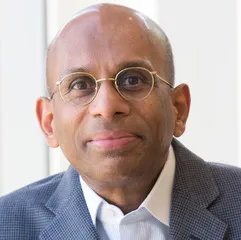
Pav Gill
Wirecard whistleblower and founder of ConfidePav Gill, Wirecard Whistleblower and CEO of Confide
“The idea of 'agreeing to disagree' is becoming unknown. It is, however, one of the most essential principles, enabling leaders to keep openness of mind. We can't be global citizens if we stay fixated on our viewpoints.”
Pav Gill, Wirecard Whistleblower and Founder& CEO of Confide, shared his story and key leadership lessons in my "Leading Through Disruption" series.
Could you please tell your story and highlight a few crucial events that brought you to where you are today?
Gill: I grew up in Singapore’s subsidized housing as the only child of a single parent. My mum pushed me through the city’s best schools. Following in her footsteps, I studied law. In September 2017, I joined Wirecard, a fast growing German payments company, as their first senior in-house lawyer for the Asia-Pacific region. Within a couple of months, a Wirecard employee from the Finance Department approached me. She told me that her colleagues were cooking the books, forging invoices, and making up client relationships. I started an internal investigation and hired a top Singapore law firm, Rajah & Tann LLP to look at the material including raw internal inboxes of the alleged individuals. One of these individuals was Edo Kurniawan, the Indonesian VP for Accounting & Controlling at Wirecard. At some point when the General Counsel of Wirecard found out about the investigation about a month later, the executive top management in Munich learned about the affair.
Jan Marsalek, who used to be Wirecard COO and is today a fugitive, took the matter into his own hands. Markus Braun, CEO, believed that the matters raised in the Rajah & Tann preliminary report including severe compliance breaches was a waste of his time as double digit million amounts weren’t material enough. The investigation was then modified to become a gap analysis into Wirecard’s internal weaknesses.
In October 2018, I was forced out of the company after nearly 4 months of intimidation culminating with an attempt to send me to Jakarta on a “one-way” trip. I was willing to start over and forget about what happened. But Wirecard made my life tremendously difficult. They tried to crash me emotionally and disturb my professional path. My mum helped me become a whistleblower. She contacted the Financial Times. The newspaper was already aware that something was very wrong with Wirecard for several years. The rest is history.
Using the material I provided to them, the Financial Times published their first article on January 30th, 2019, that set in motion a chain of events exposing the former darling of the capital markets and corporate establishment in Germany. The business, which was at its peak valued at 24 billion Euros, went bust.
In 2023, I created Confide, a company that provides a technology solution to enable organizations to detection, mitigate, and manage of business risks before they escalate into public events.
The name “Confide” suggests that your personal story deeply impacted what you wanted to create as a solution and a business.
Gill: People in situations like mine are very isolated. It is tough to speak to anyone about fraud and suspicions because of the sensitive aspects you are dealing with. I had no choice but to tell my mum. We live together so she has the right to know in case anything happened to me. Otherwise, my situation was highly challenging.
People who want to speak up don’t know who to confide in. They might confide in the wrong people. Companies install NDAs and exercise pressure to silence those with sensitive information.
Many years have passed since Wirecard got dismantled, and it struck me that there wasn’t a comprehensive end to end investigations tool to benefit companies, lawmakers, and people trying to expose things. I wanted to create a tool allowing whistleblowers to anonymously report complaints and company key executives to be given the opportunity to then respond to these issues while creating a secure and immutable paper trail. Such a governance solution should facilitate risk management early on and even prevent things from being publicly exposed, as these would be handled with care inside of a business. I wanted to build a platform to avoid disgruntlement, fear, and anger for people who tried to do the right thing. Actually, I wanted to prevent people like me from being forced to go out. Great internal compliance solutions mean you will have fewer external whistleblowing cases. Of course, everything in my tool has to be fully encrypted where no one from our side has any visibility as to the reports as they are managed independently by our clients in their respective organizations.
Wirecard was an exceptional case, but other big companies call for such a governance solution.
Gill: There are the Boeing 737 Max incidents, the UK Post Office Horizon scandal, and the collapses of financial institutions such as Crédit Suisse and Silicon Valley Bank.
Do you think the regulators learn from these cases?
Gill: Wirecard was one of the primary triggers for the swift implementation of the EU whistleblowing directive. Germany took one of the most relaxed and weak approaches to implement it. I think that Germany's fines for non-compliance are ridiculous. The maximum fine is just 50 tsd. EUR. In Spain, fines go up to one million euros. I think the way Singapore has gone about things is pretty effective in terms of making local compliance officers equally liable as the CEO for any compliance or regulatory breaches in the financial services space.
What would you advise a board of directors to prevent horrific compliance stories?
Gill: The board must have and demand access to any whistleblower reports during board meetings and updates. At Wirecard, an internal compliance hotline was installed, but it went directly to Jan Marsalek. Top management and the board must have solutions that prevent governance from being easily compromised.
Besides, boards of directors really need to understand their roles. That's easier said than done. Many non-executive directors still sit on multiple boards without understanding the exposure and liabilities when things go wrong. Many fear asking too many questions because they might feel diminished as if they were employees and not board members. They also don't want to be seen as troublemakers. It takes much effort to ask as long as needed, even if it means asking questions other people are unhappy about.
What are the most critical leadership lessons you have learned in the past few years?
Gill: The idea of 'agreeing to disagree' is becoming unknown. It is, however, one of the most essential principles, enabling leaders to keep openness of mind. We can't be global citizens if we stay fixated on our viewpoints. We must learn from each other. For example, so many privacy and data protection regulations are local, but they might be influenced by something as big as the European GDPR.
How do you hire?
Gill: I want people to join my organization because they believe in the idea behind it. I am not looking at them just as employees; I want ambassadors. The younger workforce doesn't necessarily believe in many old concepts. The world around us is evolving so quickly. No voice is too small in it. It is always difficult, but I try to hire for a cultural fit and overinvest in communication.