Scrutinize the buzzwords.
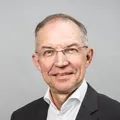
Markus Hosang
General Partner, BiomedPartnersMarkus Hosang, General Partner BiomedPartners, BioTech Board Member
“The best learning came from seeing companies — around five hundred a year in our active years, on paper and face to face, each a different disease and therapeutic modality. Just by listening and watching what they did, you learn continuously.”
Markus Hosang, General Partner at BiomedPartners, shared his thoughts on building companies to achieve landmark exits, the flow of innovation between big pharma and small companies, AI, and how to triage noise after 45 years of pattern recognition in my "Leading Through Disruption" interview.
Tell me about your path - two or three pivotal moments that brought you here.
Hosang: The foundation was academic: PhD from ETH Zurich (one of the best universities in Europe), then a postdoc at Stanford University Medical School.
The first pivot was Hoffmann-La Roche, where I built and led vascular disease research; that put me on the radar of the president of Central Research, and I became his Chief of Staff. The second was Roche’s globalization. My boss became president of global pharma R&D, and I, as his Chief of Staff and Director of the R&D Strategy Unit, helped build and run that organization. Then came the initial due diligence on Genentech, and managing the arm’s-length collaboration between the two companies. Strategically, that was an eye-opener. A later pivot was personalized medicine: when Roche acquired Boehringer Mannheim in 1997 and became overnight the world’s largest diagnostics company, the Roche CEO asked me to help in combining diagnostics and pharmaceuticals into what we nowadays call personalized medicine.
After twenty years at Roche, I moved into venture capital, first with the well-known US venture capital firm MPM Capital, managing their European office in Munich. But subsequently joining the Basel venture capital firm BiomedPartners as a managing director. We invest in “old Central Europe” in early-stage (bio)pharmaceutical companies, take active roles, and almost always take a board seat. Across about twenty-four companies in which I have led investments, I have seen very nice exits and a few IPOs - I have even “rung the bell” at Nasdaq. The most recent was Tubulis, sold to Gilead: roughly $3.15 billion upfront and up to $1.85 billion in milestones, for a deal close to $5 billion. It makes our investors happy, and it keeps exciting cancer programs alive.
What is the typical life cycle of one of your funds?
Hosang: Each fund is 100 to 150 million Swiss francs over ten years. You make new investments only in the first five, building a portfolio of twelve to fifteen companies - though the trend now is toward fewer, so you can follow each one longer. Years six to ten are for harvesting: you refinance existing companies but start nothing new.
In practice, the timeline stretches because of milestones. We can extend by up to three years, one at a time, and usually do. When we sold the cardiovascular company Cardior to Novo Nordisk two years ago – for about €1.1 billion - a sizeable portion came as clinical and regulatory milestones; Tubulis has almost two billion dollars attached the same way. Investors happily prolong year by year to capture those payments. The model is to bring a company to a value inflection point— usually a clinically validated compound, not just a candidate—then sell it or merge it, returning cash or tradable stock to the fund.
And despite the hype about AI making drug discovery easier and simplified… Over forty years, I have seen countless approaches promise faster, less risky R&D. So far, the timelines and the risk have resisted promised short-cuts.
You know Roche intimately, and the world of small companies too. What distinguishes a team inside big pharma from a small company chasing the same hypothesis?
Hosang: We saw it inside Roche itself, when Roche teams competed against former Genentech teams - in-house, but at arm’s length. Competition is good. Researchers who grow up in big pharma carry two or three mandates at once: be excellent scientists, push their own project forward internally, and still assess the outside honestly — even when it means saying, “the compound out there is better than mine; I would rather have that one.” The good ones wear both hats, and the best opportunity wins wherever it comes from. Of course the in-house teams have to be incentivized accordingly.
There is a structural logic to the handoff. Often a company is 80% one asset - with Cardior, almost all the value sat in a single Phase II asset. When a big pharma takes that over, an internal champion adopts it as their baby and carries it forward. The acquirer has real skin in the game: buy an asset for a billion and you know you must then invest hundreds of millions in pivotal trials with thousands of patients. So ownership passes cleanly through different hands, and at the end there is a product that reaches the market. That is the satisfaction for me - not only financial return, but being part of a process that generates new drugs.
One case captures it. A vaccine company I co-founded, Okairos, was sold to GSK. Its value drivers included several clinical compounds, but we had successfully validated the technology in collaboration with the US Department of Defense through an Ebola proof-of-concept study in primates. A year or two after the acquisition, Ebola broke out in Africa - and GSK could say: We have a candidate vaccine in the drawer. It became one of the vaccines the WHO prepared for the next outbreak. A “by-product” suddenly became a life-saving medication.
In deep tech, I find that ecosystems enhance good execution. How does that hold in pharma?
Hosang: Environment matters enormously. In Munich, I found excellent academic centers but no depth of pharmaceutical expertise around them. Basel is the opposite: the big companies - Roche, Novartis, the former Actelion, Lonza - and a pool of very experienced people who came out of them at senior level.
Those people became excellent coaches and angel investors for local companies - a unique situation, comparable on a much smaller scale to Boston, and now emerging around Lausanne and Zurich. Talented young people who still need to mature are taken under their wing. Still, it takes a particular breed - like the founders of Tubulis or Cardior - to build a company, move on, and do it again. In our new fund, we bring three or four such people in as venture partners or CEOs-in-residence and ask them to join the boards.
After so many years, how do you keep learning, beyond reading the key journals?
Hosang: The best learning came from seeing companies — around five hundred a year in our active years, on paper and face-to-face, each a different disease and therapeutic modality. Just by listening and watching what they did, you learn continuously. For the technical frontier, I now rely on young scientists whose PhD or postdoc is only three to five years old; they are close to the new targets, while I hold the pattern across decades.
I catch myself reacting fast - sometimes too fast- thinking: “I have seen that before; it did not work.” And sometimes I am wrong. But you learn to triage: on a first pass I can often tell within minutes whether an opportunity is interesting, or whether something about it - or the people behind it - is off. You have to be fast when five hundred business plans cross your desk, and the danger is that speed makes you unfair.
After forty-five years, I am a bit of a fossil, and that is honestly a good reason to hand over now - so as not to become the person who assumes he knows the whole industry and misses his own blind spots. The discipline that stays constant is quality: Do not follow fads unless they carry real validation. Scrutinize the buzzwords.