My hope is about actions.

Lisa Witter
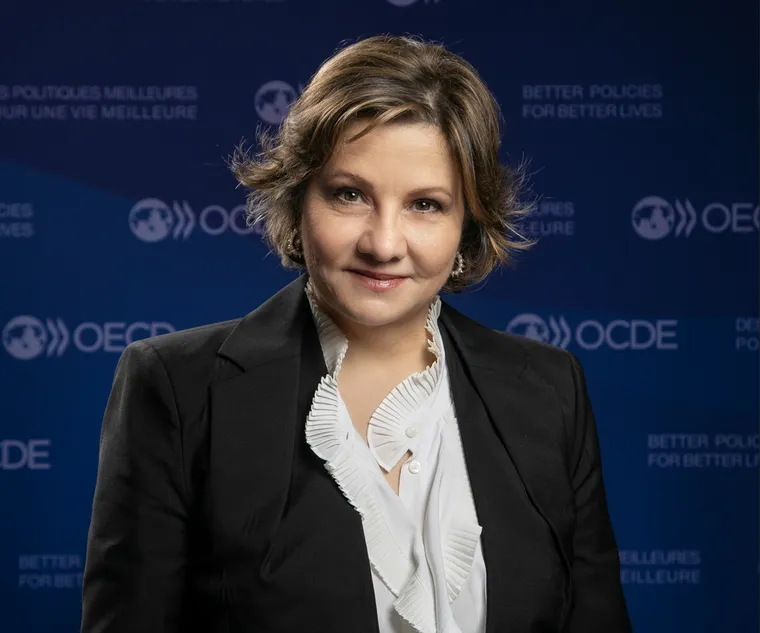
Founder, Better Politics Foundation, and co-founder, ApoliticalLisa Witter , Founder of Better Politics Foundation and Co-Founder of Apolitical
“…from my days in sports, I know that every achievement comes with very hard work. Our bodies and brains will hurt if we want to progress. That’s what worries me about AI. We might start believing that we can skip the necessary struggle. That somehow something great will materialize without wrestling with difficulties.”
Lisa Witter , Chairwoman and Founder of Better Politics Foundation and Co-Founder of Apolitical, shared her key leadership lessons in my "Leading Through Disruption" series.
Could you describe your path, highlighting the pivotal moments that led you to where you are today?
Witter: I'm speaking to you from a renovated cow barn north of Berlin. My husband and I love breathing new life into old structures. Above me is the beautiful wooden loft where hay was once stored—we're the first non-bovine residents, and I often sense the history and nature surrounding us.
I grew up in the Pacific Northwest, born in 1973 at a 4th of July demolition derby—"It's been a bang ever since," my mother likes to say. Title IX had just passed, opening doors for girls in sports. As a competitive athlete, I learned about strategy, resilience, and teamwork—foundations that would later support my entrepreneurship. My North Dakota grandmother introduced me to the Protestant church, which, though I'm not religious now, instilled in me a connection to something larger than myself.
My athletic drive—they called me "Animal"—and desire to serve something greater led me naturally to politics. I loved winning and helping people. Growing up amid community gun violence, I was selected for our natural helper program. As both a jock and a nerd, I bridged social circles, connecting residents with resources.
Several years later, I found myself at the Seattle Chamber of Commerce, seated beside Bill Gates Sr., watching politicians learn campaign tactics. It struck me that we never taught them actual leadership. I recalled Greenleaf's concept of "servant leadership"—planting shade trees you'll never sit under. I was witnessing the paradox of politics being so focused on winning elections rather than building legacies and systemic change.
Later, on a Showtime reality show where I ran for president, I met Frank Luntz and George Lakoff—masters of political language. They taught me that well-formulated thoughts trump raw emotion or even the "best" ideas.
Years later, in Greenland, I confronted another paradox: the melting glaciers threatened our planet's existence, yet they captivated the human eye with their breathtaking beauty. I learned how to sit with the discomfort of two things being true simultaneously. Contradictory truths surround us, indeed, while we live in a polarized world, where people seem to hold very clear opinions.
I recently returned from Japan, where I was studying what constitutes being a good ancestor. I was working with a Buddhist monk, who was incredibly interested in AI. His Shinto view, that AI has a spirit akin to that of trees, animals, or even teacups, challenged my Western logic. The encounter with "inter-beingness" forced me to question my core beliefs. Today, I'm on an intense self-discovery journey without a destination on a map—and I'm loving it.
Life itself embodies the tension between light and shadow. Consider how in fiction, this duality creates profound meaning—Harry Potter carrying a fragment of Voldemort within himself, facing the ultimate sacrifice to vanquish darkness. In Almodóvar's recent film, two reunited friends share precious moments in a sun-drenched house, their laughter and intimate conversations unfolding against the backdrop of one woman's approaching end-of-life choice. On a different level, but you've encountered similar paradoxes in your travels—Greenland's glaciers being simultaneously breathtaking and devastating, Japan's spiritual traditions challenging Western binaries. Within these contradictions that define our existence, how do you personally define success?
Witter: That's what I call a ‘meta-question.’ What I've discovered is that my certainty diminishes with age. There's both vulnerability and liberation in acknowledging my own ignorance. I deliberately challenge myself each year, such as the silent retreat I attended two years ago. I find wisdom in Rumi's poetry, particularly his insight that apparent misfortunes often reveal unexpected gifts. When we examine the concept of ‘success,’ we see how culturally defined it is. Society celebrates the entrepreneur who sells their company for millions, yet maintaining ownership can sometimes yield a greater long-term impact. I've learned that embracing questioning doesn't mean being directionless. It means a person is willing to look beyond immediate results toward more profound understanding.
How do you define a successful politician?
Witter: Success in politics isn't about universal agreement—it's about earning respect despite disagreement. I've witnessed this capacity deteriorate over time. Our voters struggle with the same tension: how to hold opposing truths without retreating to black-and-white thinking.
Politicians today seem hypersensitive to public perception, which creates a trap. You'll never control how others perceive you—you can only control your response to criticism and work on yourself. Beyond serving the public, I believe politicians should act as facilitators of public engagement. We're not operating in binary code—on/off, yes/no. We're complex beings with the capacity to develop agency. The truly successful politician doesn't just solve problems for communities; they empower communities to solve their own problems.
In today's political climate, the art of respectful disagreement appears to be increasingly rare. What factors do you believe have contributed to the global surge in populist movements?
Witter: Populists are really great attention merchants. They make you addicted to the drug of easy answers. It's a really uphill battle to live in an attention-oriented world.
When Churchill addressed Parliament or Kennedy spoke to the American people about doing things because they were hard, they weren't just communicating policy. Today's sound-bite culture has largely replaced that tradition of substantive debate. How can we challenge this status quo?
Witter: At my company, I am obsessed with designing experiences. We discovered that when politicians aren’t constantly operating from a place of stress and burnout, the quality of their decision-making changes. So, we engage them in simulation exercises, be it for a couple of hours or even a week, and we work on mental wellbeing. Besides, Wwe’ve also created immersive simulations where corporate executives step into politicians’ shoes. I believe this work is increasingly important, considering that the Edelman Trust Barometer consistently shows public confidence in politicians hitting rock bottom year after year. Rebuilding that broken trust requires grassroots engagement and work with communities.
While half of Germany's GDP is consumed by government spending—rising to 56 percent in neighboring Austria—European innovation struggles to breathe. Even as emerging technologies like AI offer potential growth, bureaucratic expansion continues unabated. Consider the irony: a new European AI regulatory body creates 140 government positions while the very companies they'll oversee are fleeing the continent, driven away by mounting regulatory costs. In February 2025, JD Vance sharply criticized European governance by arguing that bureaucracies have supplanted democracies, leading to a retreat from core democratic values across the continent. Was he right?
Witter: It's not about government size—it's about how government delivers. My company runs the largest peer-to-peer platform for civil servants globally, and we're seeing AI create efficiencies in government operations. The real question becomes: how do we leverage these newfound resources? What skills should we prioritize to remain competitive? I sympathize with public frustration—I mean, in Germany, you still need a physical signature to register an electric vehicle! But some dissatisfaction stems from unrealistic expectations. We've grown accustomed to ordering dinner with a few taps on our phones and having it arrive within the hour. We travel abroad yet expect every service to function exactly as it does at home.
I keep coming back to the concept of personal responsibility in these systems. If we sit back expecting governments to fix everything, we'll be waiting forever. The truth is, we constitute the government—politics is us. So where's our skin in the game? What time, energy, or resources are we personally committing to citizenship?
When I begin working with C-suite leaders, I quite often request their calendars from the previous quarter. I'll sit with their executive assistants, analyzing how these powerful individuals actually allocate their hours. The disconnect is often startling—they'll passionately describe ambitious visions during our first meeting, yet their schedules reveal days consumed by activities entirely unrelated to those stated priorities.
Witter: While I'm no spreadsheet devotee, I do insist on monthly reviews—now streamlined with AI—that reveal exactly how we're tracking against our goals and how we are organized to deliver. This rigor is a habit I carried over from my athletic days. Leadership isn't something magical. It's showing up day after day, doing the unglamorous work, holding yourself accountable, and ensuring others do the same. Besides, from my days in sports, I know that every achievement comes with very hard work. Our bodies and brains will hurt if we want to progress. That’s what worries me about AI. We might start believing that we can skip the necessary struggle. That somehow something great will materialize without wrestling with difficulties.
I see a fork in the road ahead for human intelligence. On one path, people who sharpen their critical thinking and leverage AI as a tool will thrive intellectually. On the other path—where I fear most will tread—people surrender to convenience, allowing their cognitive muscles to atrophy. There's no shortcut to excellence. My students in AI Literacy classes are often surprised when I show them brain scans revealing how neural pathways strengthen only through challenge and discomfort. The brain releases dopamine not as a reaction to pleasure, but in anticipation of something good. Dopamine is a real learning hormone!
I'm curious, as a parent, how do you frame the value of struggle in your children's learning journey?
Witter: I am very privileged, because I learned a lot from my loving parents. My boys are 16 and 18. I teach them the difference between pleasure and satisfaction, the importance of individual agency, and the beauty of discipline in achieving progress. These conversations help them develop what Daniel Kahneman calls ‘system two’ thinking - that deeper, more complex problem-solving that weighs long-term value over immediate gratification.
When my husband and I decided to have children, we developed a clear metaphor. We are gardeners, not carpenters. There are some clear phrases to guide us as a family: Be kind, work hard, and have fun.
What do you think is culture?
Witter: When most people hear "culture," they picture art galleries or concert halls. While that's one dimension, I'm more interested in the invisible architecture—the unspoken agreements that shape our daily behaviors. These social contracts aren't fixed; they evolve. Take littering, for example. In the 1970s, the "Give a hoot, don't pollute" campaign featuring Woodsy Owl transformed Americans' relationship with their environment. Within a generation, tossing trash from car windows went from commonplace to taboo.
Cultural norms that permit children as young as twelve to be married off exist in various regions today. Still, just like our attitudes toward littering, these practices aren't immutable—they're social agreements that can be rewritten.
Are you an optimist?
Witter: Yes, because everything else is a no-go. Optimism gives you a hope that something may turn out in a different - and a better - way. My hope isn’t about a belief; it is about actions. I have recently written a piece called “Hard Hope.” You can’t sit around and think. You’ve got to do, even imperfectly, even if people around feel overwhelmed.